Before the Town
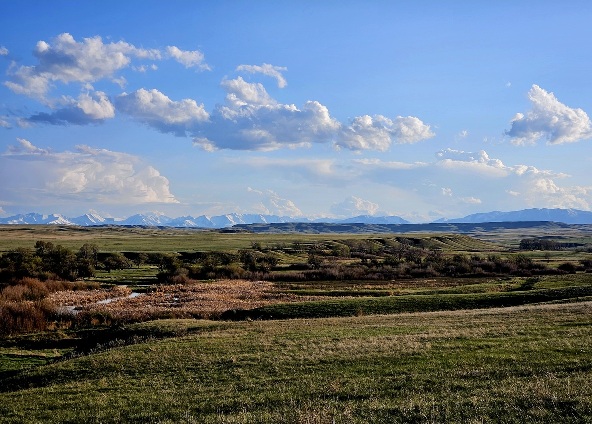
Long before there was a Harlowton, this stretch of the Musselshell was a place where bison migrated down from the high country to winter along the valley floor, and where the Crow, Blackfeet and other tribes moved through on seasonal hunts. An 1868 treaty with the Crow opened the Upper Musselshell to white settlement.
The first permanent settler in the Musselshell was William Gordon, who moved his cattle into the valley during the winter of 1871-72. He was soon joined by others, including J. H. Freeser, James Holiday, and P. H. Clark. In 1873, Perry J. Moore homesteaded one of the first sheep ranches in the valley at the base of the Crazy Mountains west of Two Dot - ground the Moore family still works today, five generations later, now running Black Angus cattle. By 1882, the Chicago-Montana Livestock Company had built a large cattle operation at the Hopley Creek Ranch northwest of present-day Harlowton, with S. S. Hobson as part owner and manager.
Merino: A Post Office, a Saloon, and a Breed of Sheep
In 1881, a post office was established in a log building along the river and named Merino, after the breed of sheep that Charles Severence was running in the area. Merino was on the east-west stage route from Martinsdale to Lavina and the north-south route from the Judith Basin to Melville and Big Timber. The 'town' was made up of a combination stage stop, post office, general store and saloon - an arrangement the federal government disapproved of, so a separate post office was built and opened in 1885.
Richard A. Harlow and the Jawbone
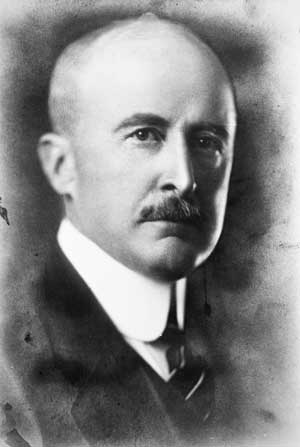
Everything changed in 1900, when Richard A. Harlow pushed his Montana Railroad - known to everyone as “the Jawbone,” a nickname earned by Harlow's reputation for talking his way through any deal or right-of-way dispute — into the Musselshell Valley. The existing Merino terminal was found to be a mile from the new tracks, so the town was relocated to meet the rails, and on November 9, 1900, the post office was officially renamed Harlowton in honor of the man who brought the railroad.
The first lots were auctioned on June 10 of that year; Tom Hanzlik, who had ridden his bicycle from the copper-mining camp at Castle Town, bought the first one and put up a barber shop. Within two months, sixteen businesses lined the new town's main street.
Prosperity, Fire & Rebuilding
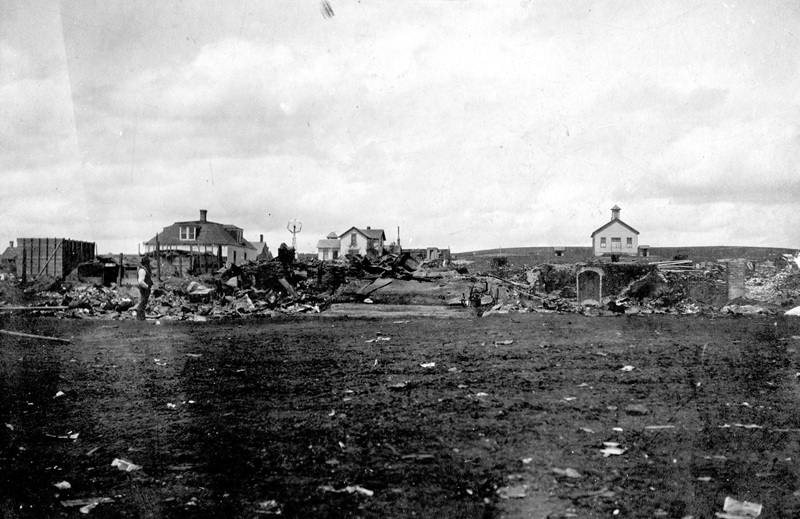
The little town of Harlowton flourished. "Men employed in the building of the railroad swarmed the town, settlers seeking new locations came on every train, the construction of two large hotels was taken up, and evidence of prosperity were seen on every hand" 1. Then the disastrous fire struck, June 17th, 1907. The fire started in the Marshall Store and destroyed 24 buildings on the north side of the street.
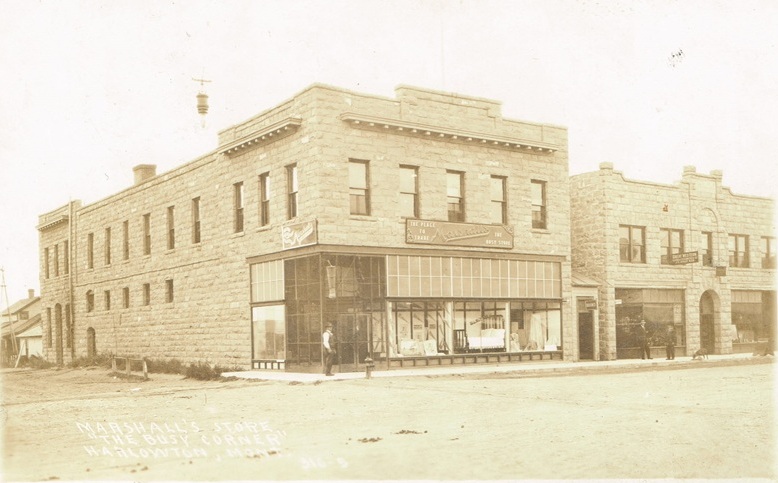
After the fire, much of the rebuilding and new construction was on Central Avenue - many of the buildings being built of sandstone quarried from the hill below the Graves Hotel. The elegant Graves Hotel built in 1908 was a landmark of the town for well over a century before being lost to fire in 2023. The Marshall Building - home today to the Upper Musselshell Museum - was a part of this second rebuilding. Several of those sandstone buildings still stand today, still occupied, within a block of the museum.
The Milwaukee & The Place Where Electricity Replaced Steam
In 1906 the Chicago, Milwaukee, St. Paul & Pacific Railroad - the Milwaukee Road - began pushing its Pacific Extension west through Harlowton. The first passenger train from the east arrived on March 9, 1908.
Harlowton's defining moment came in 1914, when the Milwaukee Road chose the town as the eastern terminus of its great electrified main line. For the next six decades, Harlowton was the point where steam (and later diesel) locomotives were swapped for the great electric “Little Joes” that hauled trains across the Continental Divide.
Harlowton became the eastern terminus of a 438-mile electrified main line running west to Avery, Idaho — at the time, the longest stretch of electrified main-line railroad in the world.
— The Milwaukee Road, 1915
Boom Years
The railroad made Harlowton. Between 1905 and the early 1920s the town acquired its first bank, drug store, church, theater, newspaper, and automobile dealership in rapid succession; Wheatland County was created around it in 1917, with Harlowton as its seat. Montana Flour Mills opened in 1910, and Harlowton became the state's second-largest grain terminal as the homestead boom filled the surrounding plains with new farms.
Wheatland was the first county in the United States to exceed its goal in the 1918 Liberty Bond Drive, and a ship — the Wheatland, Montana — was named in its honor.
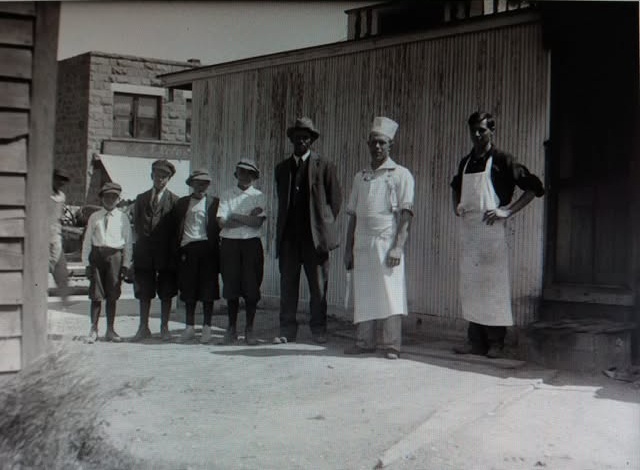
The town that emerged was more diverse than one might expect of a prairie railroad stop: crews drawn from across the country and overseas came for the railroad work and stayed. A Japanese family ran the Palace Cafe, one of Harlowton's earliest restaurants, and a small Japanese community — including the Muneta, Satake, and Yamamoto families — took root here. Sam Satake would go on to participate in driving the Golden Spike that completed the transcontinental Milwaukee.
Depression, Recovery, & the End of the Rails
The drought of 1919 broke the homesteading boom. Foreclosures swept through Wheatland County, and of the fourteen banks chartered in the county's first years, only one survived. The Great Depression deepened the damage.
But the railroad held. While the farms around it struggled, Harlowton's role as a Milwaukee Road division point — with its yards, roundhouse, and electrification terminal — kept the town employed and the population relatively stable through the 1940s, 50s, and into the 60s. Families put down roots, businesses stayed open, and the town carried on as the kind of small county seat that working railroads make possible.
Many of those same families sent men to war. Hugh Reynolds had enlisted in the Montana National Guard in Harlowton in 1934, at age 14 — his father worked at the flour mill and times were tough. He would go on to serve for the full duration of World War II, five years and three days of active duty in the Pacific.
The Milwaukee Road held on for another half century after the Depression before ending electric operations in 1974 and abandoning its entire Pacific Extension in 1980.
Eighty years after the railroad had made the town, the last train through Harlowton pulled out in March 1980 — and the rails went silent.
Harlowton Today
The rails went quiet in 1980, but the valley didn't.
Agriculture has remained a staple for the local economy. The main products are wheat, barley, oats, hay, cattle, sheep, and honey. The businesses that support them — the feed store, the veterinary clinics, the hardware stores — reflect a community that still makes its living from the land.
Harlowton has also held onto something rarer for a town its size: a small industrial base. Rocky Mountain Cookware has manufactured steel griddles here since 1992. Stone quarries around the valley produce rock and stone products that ship across the country. Cream of the West, a whole grain hot cereal whose roots go back to 1914, moved its production facility to Harlowton in 2002. Apiaries offers honey and beeswax from hives worked across the region.
Wheatland Memorial Healthcare — recently moved into a newly built facility — remains one of the town's largest employers. Other notable employers include Harlowton High School, Hillcrest Elementary School, the Judith Gap Wind Farm, and the Musselshell Ranger District.
Annual events include the Harlowton Rodeo, the Wheatland County Youth Fair, the Harlowton Kiwanis Show, and the Harlo Music Project.
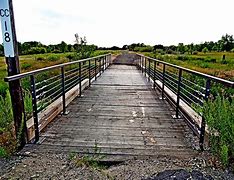
The old Milwaukee Road trackbed, next to the Harlowton Milwaukee Depot Museum, has been converted into the Smoking Boomer Trail - a walking path running through the same corridor where the electrics once rolled west toward the Rockies.