Sheep in the Valley
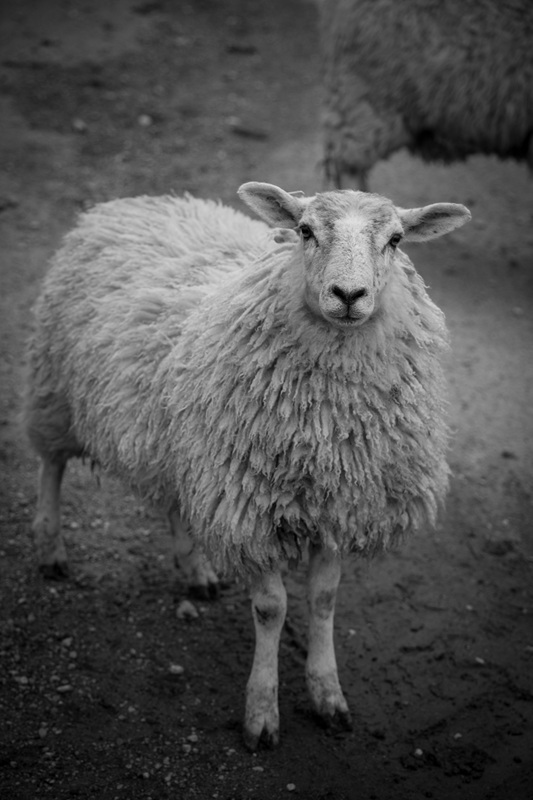
The first sheep were brought to Montana in 1847, when Anthony Ravalli took them to St. Mary’s Mission in the Bitterroot Valley. Sheep would not reach the Upper Musselshell Valley for another thirty years. Before continuing that story, it helps to understand how the Upper Musselshell Valley was first settled.
Settling the Upper Musselshell
Under the Treaty of Fort Laramie of 1868, the valley was designated as Native American territory. Two years later, copper was discovered and a camp called Copperopolis was established. The camp closed for the winter because of harsh conditions, though there were hopes it would reopen in the spring and support a postal route. Those plans ended as conflict increased when settlers encroached on Native lands.
The following year, Fort Howie was built, and the Musselshell Road was established as a military supply route. It was used to haul mail and freight with teams of four to eight oxen. The route ran from the mouth of the Musselshell on the Missouri River, roughly 300 to 400 miles below Fort Benton. The river there was navigable by steamboat for six months of the year, compared to only three months at Fort Benton. From the mouth of the Musselshell, Helena was about 200 miles overland. Freight could be moved over the road for an estimated 4 cents per pound, bringing the total cost from St. Louis to Helena to about 10 cents per pound. Fort Howie proved ineffective against attacks and was disbanded later that same year.
In 1869, Camp Baker was established 13 miles east of Diamond City, to help protect settlers and support settlement in the Smith River Valley. In 1870, Jacob Severance and his son Charles settled in the Smith River Valley. At that time, Montana had around 279,000 sheep.
In 1871, M.T. Grande arrived at the forks of the Musselshell as a big-game hunter. He reported seeing a buffalo herd so large that it took three to four days to pass through the gap at the headwaters of the Musselshell.
During the winter of 1871–72, temperatures stayed below zero from November 22 into February, and three feet of snow covered the ground for four straight months. That January, William Gordon and other cattlemen, including Ed Sayre and William Smith, brought the first cattle into the Upper Musselshell from the Smith River Valley to take advantage of the windblown benches.
Not until 1874 did the Carroll Trail replace the Musselshell Road. The trip from Helena to Carroll, at the mouth of the Musselshell, took 23 days. That same year, the Moore brothers and others settled permanently in the Upper Musselshell Valley.
In 1875, about 20,000 sheep were in the area, producing at least $20,000 in fleece revenue alone and fueling predictions that wool would out-earn mining. Among the sheepmen in the Smith River Valley were John M. Smith and Henry McDonald, who had come from Ohio to mine before buying 900 sheep. That summer, conflict led to the abandonment of the Carroll Trail.
The First Flocks
In the fall of 1876, McDonald was running sheep on Willow Creek. That season, he grazed wether lambs with Ford and Porter, and they together hired a tall, lanky Norwegian boy to herd them. At the end of his first day, he complained that the lambs ran like antelope and said he could not manage them without a saddle horse. They gave him one, and he stayed on the job. The boy was M.T. Grande.
That same year, the Smith brothers and M.T. Grande bought 2,000 Merino ewes in Boise, Idaho, for $2.50 a head. The purchase took place during the Nez Perce War, and on their way to Boise they had to pass through country affected by the fighting. The Nez Perce had already taken the Lolo Trail toward the Musselshell, troops had been sent out, and travelers were warned that the route was unsafe. Some settlers had already fled to Bannack, while others had been killed, and guards were posted outside the town. Grande and Smith went on anyway. As it turned out, they were only a day ahead of the Nez Perce in an area where several settlers had been killed. By the time they returned with the sheep, the conflict had been subdued, though they witnessed many disturbing scenes. These sheep were the first brought into the Upper Musselshell Valley. In August, William A. and John M. Smith, along with M.T. Grande, settled south of present-day Martinsdale and established the well-known Smith Brothers Sheep Company.
Believing sheep would be more profitable than cattle, the Severances moved into the Upper Musselshell Valley that same year. J.H. Severance left the Smith River Valley and pushed farther east to a bench west of Judith Gap. Within six months, he had built a house, a large sheep shed and corral, a lambing shed, and other improvements. The operation would later become known as the Musselshell Sheep Company.
Ed Sayre, a miner from New Jersey, organized a woolgrowers stock company to establish his ranch in the Smith River Valley and bought 2,000 sheep. The Sayre brothers were the first to organize a joint-stock company in the sheep business. Sam Berry also arrived in the Smith River Valley to work on Charles Cook’s sheep ranch. Many of the sheep trailed into Montana came from Oregon and California. Wethers made up most of these drives because ewe-and-lamb pairs were difficult to trail. Most of the California sheep were Mexican-Spanish flocks that had followed the gold rush west. By then, an estimated 500,000 sheep were grazing in Montana, and the sheep from Oregon appeared to adapt better to Montana’s climate.
In 1878, M.T. Grande dissolved his partnership with the Smith brothers and took 666 ewes to Comb Creek near Lennep. The Smith brothers continued their operation, while M.T. and his brother formed the Grande Brothers Sheep Company. By then, 12 ranches had been established in the Upper Musselshell Valley, four or five of them sheep ranches. Large bands of sheep were steadily arriving; Burt and Klein of Helena sold 17,500 to area ranches which had been driven in from California and Utah, with another 3,200 on the way. The Severances bought 1,500 sheep and took shares in another 1,000 from Klein at $3.25 a head. Camp Baker was also moved 10 miles farther east and renamed Fort Logan.
Growth on the Open Range
Sheep herds continued to grow, and by 1879 the Upper Musselshell Valley was estimated to hold 60,000 sheep. A mail route was established between White Sulphur Springs and Lewistown, and J.H. Freezer organized the first major cattle roundup.
The following year, Ralph and Sam Barry homesteaded 10 miles east of present-day Harlowton along the Musselshell, at what is now known as Winnecook. Ralph drove in his first investment of 4,500 sheep from southern Utah. P.I. Moule also settled in the Upper Musselshell along Carless Creek, where some of the last bison in the area would be seen. That same year, the Oka and Ubet stage stops were built, and Fort Maginnis was established on Ford Creek, effectively ending conflict with Native Americans in the Upper Musselshell Valley. By the next year, Meagher County was estimated to have 97,500 sheep.
In 1882, the Northern Pacific Railroad was completed. That same year, Jennie Corson, known as the “Montana Shepherdess,” purchased Frank Severance’s ranch on Hopley Creek and a band of sheep near Oka for $10,000 in cash. Within a year, the investment had increased in value by another $27,600, with a flock numbering between 3,000 and 5,000 sheep. Wool sold through the Big Timber outlet brought 19 to 20 cents per pound from a Boston buyer. The following year, the Montana Wool Growers Association was established, becoming the first agricultural organization in the state, and wool rose to 27 cents per pound.
In April 1884, Jennie Corson and Jacob Severance married and moved their ranch headquarters to Hopley. Within two years, the Severance Brothers Sheep Company was producing a wool clip of 125,000 pounds.
Hard Winters and Hard Markets
In 1886 and 1887, the Cumberland Mine was discovered and the mining camp of Castle was established. These years also brought the winter that transformed Montana’s open range. A traveler from Big Timber to White Sulphur reported at least 1,000 dead sheep, and two weeks later losses from the storm were estimated at 10,000 head. Conservative estimates suggest that 20 to 25 percent of all livestock in the Upper Musselshell Valley died that winter. Many starving sheep chewed wool from one another and gnawed fence posts; those that did not die of starvation often died from blockages caused by what they had eaten. When the thaw came, hides were collected and sold from the dead animals. The early cattle roundup was canceled, and calf branding and cattle gathering were delayed until fall 1887 because cattle numbers were so low.
Sheep survived somewhat better than cattle, and some cattle ranchers turned to sheep for economic reasons. As a result, sheep ranching expanded sharply, while cattle numbers never fully recovered. Before the Panic of 1893, Upper Musselshell sheepmen also benefited from the McKinley Tariff, which placed duties of as much as 13 cents per pound on imported wool. By this time, Severance was running about 24,000 sheep, and the Northern Pacific Railroad had reached Montana.
In 1891, Richard Harlow sent an experienced railroad engineer to find a route from Helena to Castle. He soon incorporated the Montana Midland Railroad, though the coming panic would halt the effort. In December of that year, Jacob Severance died from injuries suffered in a horse-and-buggy accident. Soon after his death, the Bower brothers took over the Severance ranch. Both the Severances and the Bowers had been buying land extensively, and the Bowers’ ability to continue doing so despite 5-cent wool after the Panic of 1893 showed the depth of their resources. As the Northern Pacific reached the western border of Montana, sheep prices fell from 25–27 cents per pound to 17–18 cents. Even so, sheep numbers in Meagher County rose to around 297,000, while cattle numbers remained low at 24,000.
The winter of 1893–94 was another severe one. Stockmen were estimated to have lost 25 percent of their herds, and sheep prices dropped to 9 cents per pound. The Wilson–Gorman Tariff Act also reduced duties on imported wool, making the year especially difficult for sheep producers. In September 1894, Richard Harlow regrouped and incorporated the Montana Railroad Company.
Merino and the Jawbone
In 1895, work began in Sixteen Mile Canyon on the Montana Railroad Company line, more commonly known as the Jawbone. At the same time, a wooden bridge was built across the Musselshell, and several buildings rose nearby. The settlement became known as Merino, named after the breed of sheep Frank Severance had run there. It stood where the Harlowton substation is now located. Charles Severance had expanded his ranch south to the Musselshell, established his headquarters near Merino, and built a shearing plant near the site of today’s sewer lagoons.
In 1896, the Jawbone reached Leadboro, three-quarters of a mile below Castle. The following year, shipping and smelting costs kept many mines from reopening. As a result, the economies of the Smith River Valley and Upper Musselshell Valley depended heavily on sheep, and Harlow saw an opportunity to keep the railroad operating. By then, cattle numbers had fallen to 21,500, while sheep numbers had risen to around 324,000. Those numbers would remain fairly stable for the next decade, until the first homesteaders arrived.
In June, the Grande brothers became the first to ship wool and sheep over the newly completed Jawbone, loading at Leadboro. That same year, the Smith brothers bought 20 sections of railroad land, and the Montana Railroad Company built a wool warehouse halfway between Ludlow and Leadboro. Estimated to cost between $50,000 and $60,000, it was large enough to hold about 3 million pounds of wool. By the late 1890s, signs were already pointing to the end of open grazing. One of the clearest was the arrival of 10 boxcars of barbed wire, much of it destined for the Upper Musselshell Valley. There was growing concern that smaller sheep ranches would be forced out by larger operations.
In 1899, the Jawbone was extended 24 miles to Martinsdale. The expansion brought mixed feelings. While easier shipment of livestock and wool was welcome, many also understood that the railroad would attract more settlers. The Grande brothers, however, objected for a different reason: they had built a brand new barn with only a narrow gap between it and the planned route. The Grandes had no intention of moving the expensive structure, whose roof alone contained more than a carload of metal, and the surveyor had no intention of moving the line. In the end, a compromise was reached: a corner of the $2,500 barn was cut away to allow the railroad to pass. The Montana Railroad Commission paid the Grandes $700 in compensation.
That November, Harlow announced plans to extend the Jawbone to Merino and make it the terminus, though few believed it would remain the line’s final stop. The location was strategic because stage lines between the Judith Basin and Martinsdale were competing for the fastest routes and lowest rates. Harlow believed that shipping wool from across the Musselshell to Lombard would strengthen the railroad financially. In March 1899, Two Dot was established on the Two Dot Wilson Ranch and quickly became an important shipping point for sheep and wool. Before the railroad arrived, sheep were trailed to the Northern Pacific at Big Timber or even as far as Miles City, while wool was hauled by ox teams or jerkline teams to Big Timber, Fort Benton, or Carroll, where it was shipped down the Missouri by steamboat. After the arrival of the Jawbone, shipments instead went to Lombard, where they were transferred to the Northern Pacific for eastbound travel.
In June 1900, the Jawbone reached a point just north of Merino, where the first town lots were sold and the settlement was renamed Harlowton. By then, Montana had become the nation’s leading sheep-producing state, with about 6 million sheep.
Shearing Plants and Peak Production
By 1903, the Jawbone had been extended to Lewistown, and the Chicago Flexible Shaft Company built a public sheep-shearing plant on Alkali Creek north of Harlowton along the freight and stage road to Lewistown. The shearers’ union charged 15 cents per head, and a shearer could average 150 to 200 sheep a day. During its six-week season, the plant handled 70,000 to 80,000 sheep. Wool shipments from the entire Smith River Valley and Upper Musselshell Valley continued to rise. The railroad also built a 35-machine shearing plant for the White Sulphur Springs area. Harlowton had two plants and was said to have processed 2 million pounds of wool in a single season.
In 1904, Montana became the nation’s leading wool-producing state, with 37,773,000 pounds of wool. As more sheepmen and cattlemen squatted, homesteaded, bought, and fenced every available acre, open-range grazing became increasingly impractical. Driving stock farther into the hills grew too costly. Many believed the era of the large rancher had passed, even though major operators such as the Smith brothers still paid much of Meagher County’s tax base. Another blow to the open range came when the federal government announced the withdrawal of lands for national forests.
In 1907, the Moore, Martin, and Shomaker ranches met at a corner on Black Butte, where they decided to build a shearing plant. It could run 10 to 12 shearers at a time, with each shearer averaging 150 to 200 sheep per day.
The End of the Open Range
In May 1907, the Montana Railroad granted the Milwaukee trackage rights through Sixteen Mile Canyon, which was too narrow to accommodate both lines separately. The Milwaukee reached Harlowton from the east in March 1908 and ultimately bought the Montana Railroad. The Milwaukee, Northern Pacific, and Great Northern then launched publicity campaigns promoting the practicality of dryland farming in Montana and encouraging settlement across the prairie. Two major ranch sales were negotiated in August and September, including a 40,000-acre sheep ranch running 40,000 sheep that sold for $60,000 at $15 per acre. One buyer remarked that his purchase would bring at least 20 more families within two or three years. A widely shared view held that too much land was being used for sheep and cattle grazing. The opening of the public domain under the Enlarged Homestead Act, along with the breakup of large ranches by land syndicates into smaller farm tracts, opened thousands of acres of eastern Montana to settlement.
By 1908, many ranchers—especially sheepmen, who had relied more heavily than cattlemen on public grazing land—began selling out. Some early settlers, such as Perry Moore, adapted by trying their hand at farming, though he eventually returned to livestock. Ranchers found it increasingly necessary either to raise hay for winter feed or to reduce herd size because of overgrazing. Gilitinan purchased the P.I. Moule ranch, also known as the Bercail Ranch, but soon decided that because of medical problems it was too large an operation for him to manage alone. He then partnered with Lew Penwell, a major ranch owner and an active buyer and seller of ranches for land syndicates, and together they formed the Penwell-Gilitinan Ranch.
The wool market then collapsed, with clips selling for only 15 to 16 cents per pound, even as the Musselshell region produced about 5,000,000 pounds of wool in a single year. After two already difficult years, many sheepmen could not survive another downturn. Despite peak production, they were unable to hold their wool for better prices. In the same period, the Bower brothers made the front page of the Harlowton paper for selling their 150,000-pound wool clip at 17 cents per pound; on the following page was notice of the sale of the Bower Brothers Ranch, with 19,000 sheep, for $300,000. It was the Penwell family’s eighth ranch purchase in Montana. Despite the sale of many large sheep ranches, Montana reached its peak sheep population in 1909 with 6,643,000 head.
In many ways, the land was seen as well suited to dryland farming. Some large ranchers resisted the change and sent Romanian herders, who spoke little English, to graze sheep on cropland. When farmers tried to drive them off, the herders could only reply, “Fine feed, fine feed.”
Legacy
At its height, the Smith Brothers Sheep Company ran 43,000 sheep. The company was later sold to I.A. Ingersol for $250,000, including railroad and state land. Once the railroad land had been fully paid for, the ranch comprised about 78,000 acres of deeded land, of which 72,000 acres were owned outright, with the remainder held as state land. In the end, the total cost reached $500,000. In 1951, the Smith Brothers Company was sold again and renamed the 71 Ranch after the Smith brothers’ brand. In 1954, Rankin purchased the 71 Ranch from a Colorado corporation.
Today, Montana remains an important sheep-producing state, though its ranking has fallen sharply from the peak years of the open range. As of 2024, the state had about 190,000 sheep. In 2023, Montana produced 1,380,000 pounds of wool.